.jpg?width=200&height=135&name=PTL_Logo_Stacked_FS%20(2).jpg)
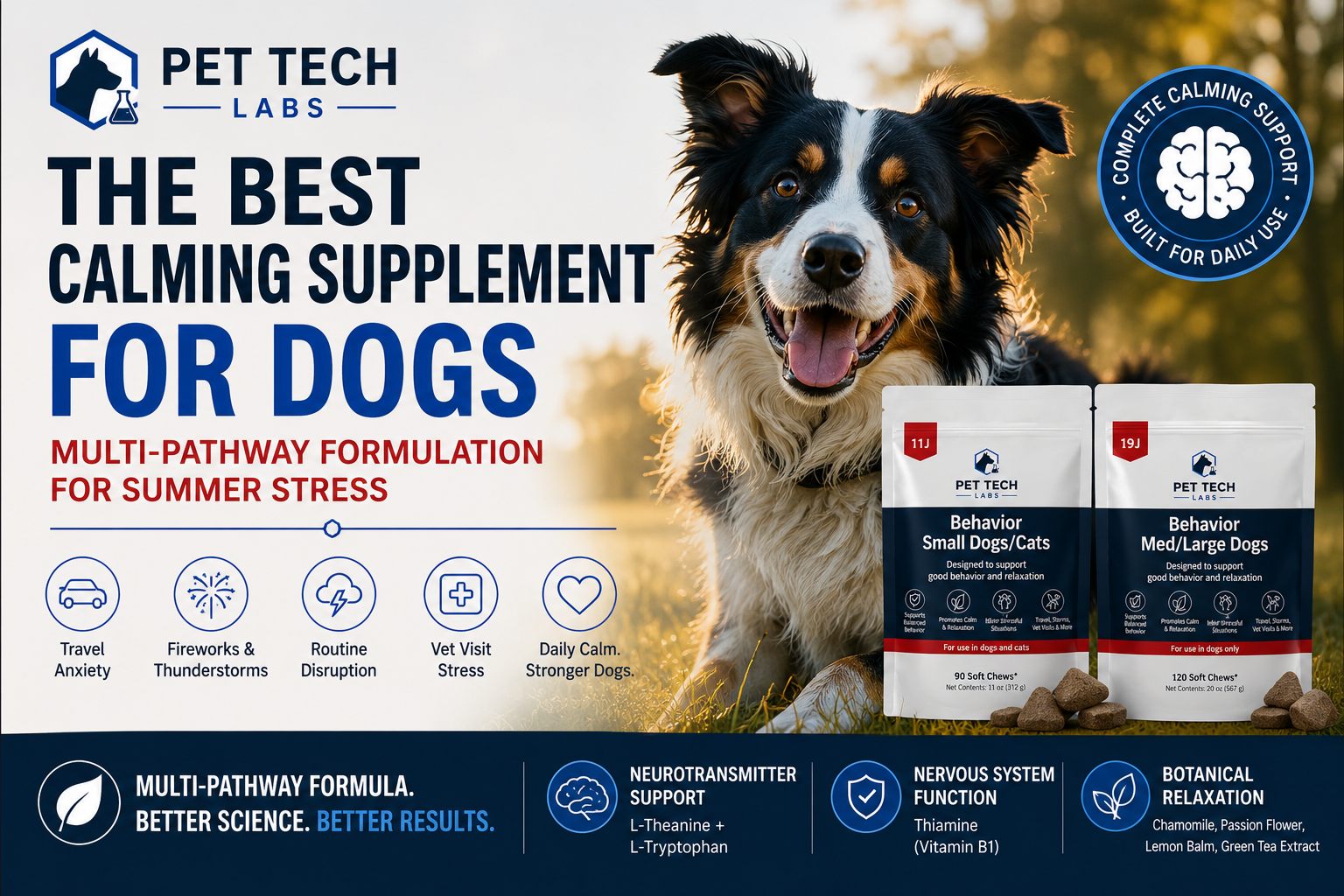
Summer brings the best adventures — road trips, camping, and outdoor celebrations. It also brings the worst anxiety triggers for dogs: travel, fireworks, thunderstorms, and routine disruption.
Most pet owners reach for a calming supplement, hoping for relief. Most calming supplements disappoint them.
Why? Because a single ingredient ... usually L-Theanine, isn't enough.
Single-ingredient calming supplements often fall short because anxiety is not one simple neurological event. Stronger calming formulas support multiple pathways at once.
That is the positioning opportunity behind 11J and 19J: complete calming support built for real-world summer stress, not just crisis-only anxiety moments.
L-Theanine has solid research behind it. It works by increasing GABA, the brain's primary calming neurotransmitter. But it's also incomplete.
Here's the problem: anxiety isn't one neurological event. It's a cascade involving multiple systems — neurotransmitter imbalance, nervous system dysregulation, adrenal stress response, and behavioral reinforcement. A single ingredient can address only one piece of that puzzle.
Most brands choose single-ingredient formulas anyway, because L-Theanine is cheap and well-known. They work with contract manufacturers offering pre-mixed "anxiety formulas" from limited ingredient lists. No customization. No iteration. No one asking whether the formula could actually work better.
The result? Pet owners see modest improvement at best, and many see nothing at all. They report inconsistent results, wonder if the product actually works, and move on to medication or behavior training alone.
The market is full of calming supplements that don't actually calm.
That's not because the category doesn't work. It's because most formulas are incomplete.
Effective anxiety support requires multiple mechanisms working together. Here's how it actually works:
L-Theanine increases GABA (an inhibitory neurotransmitter) and reduces glutamate (an excitatory neurotransmitter). The effect is calm without sedation — your dog remains responsive but less reactive. It works within 30-60 minutes and improves with consistent use.
The limitation? L-Theanine alone addresses only the GABA system. It doesn't support serotonin, the neurotransmitter responsible for sustained mood stability and long-term emotional resilience.
That's where L-Tryptophan comes in. It's an amino acid precursor to serotonin and melatonin. Unlike L-Theanine's immediate effect, L-Tryptophan takes 2-3 weeks of consistent use to show full benefit. But once it builds in the system, it creates lasting mood improvement — not just acute calm, but emotional resilience.
Together, they create both immediate GABA support and sustained serotonin reserve. Your dog gets calm right now and better coping ability over time.
This is the ingredient most calming formulas miss — even though it's arguably the most important.
Thiamine is a cofactor in neurotransmitter synthesis and energy metabolism. Dogs with B1 deficiency show anxiety, irritability, and nervous system dysfunction. Yet most brands skip it because it's not "trendy" or "scientific-sounding" enough.
The reality: B1 supports the metabolic foundation that neurotransmitters need to function. Without it, even strong L-Theanine + L-Tryptophan support works less efficiently.
Think of it this way: L-Theanine and L-Tryptophan are the active calming ingredients. Thiamine is the infrastructure they depend on.

Now we add the botanical layer — ingredients with centuries of use in anxiety support, working through complementary pathways.
Chamomile contains apigenin, which binds benzodiazepine receptors (the same targets as anti-anxiety pharmaceuticals, but gentler). It's mildly anxiolytic and improves sleep quality. Safe for long-term daily use with no dependency or withdrawal concerns.
Passion Flower is a nervine tonic — a category of herbs that support nervous system function. It increases GABA and reduces glutamate, but through a different botanical pathway than L-Theanine. This provides additional GABAergic support without duplication or over-sedation.
Lemon Balm contains compounds that support nervous system calm and mood stability. It adds mild anxiolytic effect and, honestly, makes the chew taste better. Dogs accept it more readily, which means better compliance.
Green Tea Extract contains L-Theanine naturally, plus EGCG (a potent antioxidant). The combination of added L-Theanine + Green Tea Extract is well-researched in human anxiety studies. You get synergy: anxiety support plus cellular protection.
Single-ingredient products rely on one compound. Multi-pathway botanical formulas bring multiple mechanisms working simultaneously. Chamomile + Passion Flower together provide stronger anxiety support than either alone. The botanicals complement the synthetic ingredients (L-Theanine, L-Tryptophan, B1) rather than duplicate them.
This is why multi-pathway formulas work better. You're not just hitting one target — you're approaching anxiety from multiple neurological angles simultaneously.
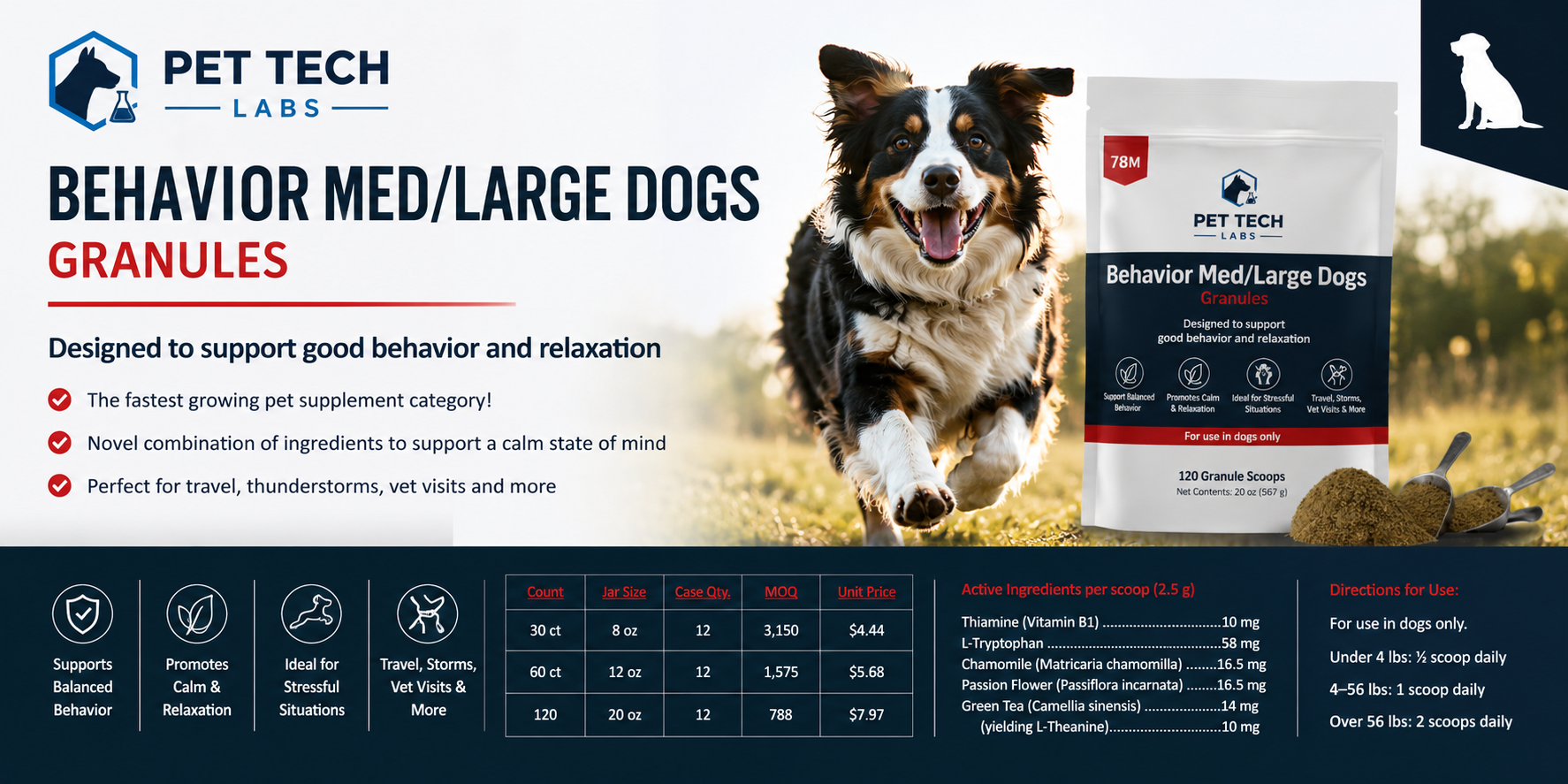
One-size-fits-all calming supplements leave money on the table. Small dogs and large dogs have different anxiety profiles and different dosing needs.
Formula:
This formula is sized for dogs under 25 lbs and cats. The dosing is lighter because smaller animals need less total dose, but the formulation is complete — all five ingredient categories represented.
Notice the higher B1 dose (65mg)? Small dogs often show more nervous system sensitivity, and they benefit from stronger B1 support. The botanical layer is simpler (just Lemon Balm) because smaller dogs respond well to lighter herbal support.
The chew format: Small enough for easy consumption, palatable enough that dogs accept daily dosing without resistance.
Use cases:
Formula:
This formula scales up for dogs 25-75 lbs. The L-Theanine and L-Tryptophan doses increase to match larger body mass. Interestingly, the B1 dose drops to 10mg — larger dogs get more B1 from their regular diet, so they need less supplemental support.
The real difference is the botanical layer. Instead of just Lemon Balm, 19J includes both Chamomile and Passion Flower (16.5mg each). These two botanicals together create stronger anxiolytic support, addressing the more complex anxiety patterns often seen in larger dogs.
The scaling principle: Bioavailability and efficacy change with body weight. A formula that's perfect for a 15-lb Chihuahua is under-dosed for a 60-lb Labrador. Two SKUs = better product fit = higher compliance and better results.
Use cases:
Here's where the market opportunity lies, and where most competitors fall short.
Traditional calming supplement marketing positions anxiety support as crisis-only:
This framing positions anxiety as a problem to solve in emergencies. It's reactive, seasonal, and limited.
But the strongest behavioral wellness formulas aren't rescue products — they're built for consistent, daily support.
Pet owners who add a calming chew to their dog's morning routine see different results than those waiting until a thunderstorm or Fourth of July to start. Why? Because consistency matters.
Dogs on daily behavioral support have a lower baseline anxiety level. When summer stressors arrive (fireworks, travel, changes), their anxiety doesn't spike as high. They have built-in resilience.
Compare that to a dog introduced to calming support mid-crisis. The supplement is still working, but the dog is starting from a higher anxiety baseline. The support helps, but it's not as effective as if the dog had been on a consistent routine for weeks.
This is why positioning matters: A formula strong enough for travel season and consistent enough for everyday routine is fundamentally different from a crisis-only product. It's better. It works more reliably. Owners see better results and become repeat customers.
The brands winning in behavioral wellness aren't competing in a crowded "anxiety" field. They're building a daily wellness positioning that creates owner loyalty and recurring purchase behavior.
Road trips, camping, weekend getaways — summer is travel season. It's also peak anxiety season for dogs. New environments, car rides, unfamiliar people, disrupted routines, and confined spaces all trigger stress.
The dogs that handle travel best? The ones already on a daily calming support routine.
The strategy: Start behavioral wellness 4-6 weeks before summer travel. This gives the formula time to establish in the system. By the time your dog gets in the car, they've already been on daily support for a month. Their baseline anxiety is lower. The travel stressor hits them less hard.
Continue the daily dose during travel. The familiar routine of the daily chew actually becomes a comfort during the trip.
July 4th is the single highest-anxiety day for many dogs. Fireworks are unpredictable, loud, and trigger both fear and an instinct to escape. July 3-5 sees spikes in vet visits, emergency calls, and lost pet reports.
Again, the dogs handling fireworks best are those already on behavioral support.
Prevention beats crisis management. Start behavioral wellness in early June, at least 4 weeks before July 4th. Build the formula in the system. By July 4th, your dog's nervous system is already more resilient.
You can't prepare for individual fireworks — they're unpredictable. But you can lower baseline anxiety so the unpredictable stressor doesn't send your dog into crisis.
Spring and summer bring frequent thunderstorms. Unlike fireworks, you can't plan ahead for individual storms. Sudden, loud, unpredictable, and often accompanied by barometric pressure changes and static electricity that animals detect before we do.
This is where daily behavioral support shines. A dog on consistent calming support handles sudden thunderstorms better than a dog without that baseline support. Not because the supplement is "working" on the specific storm, but because the dog's nervous system is already in a calmer baseline state.
Dogs with white-coat syndrome (anxiety in the vet clinic) benefit from acute dosing before appointments. But consistent daily support also helps — a dog whose nervous system is already calm handles the vet clinic better than an anxious dog receiving emergency support.
New pets, houseguests, owner travel, new living situations, schedule changes — these happen year-round. They're not dramatic crises, but they stress anxious dogs.
Daily behavioral support creates resilience. Your dog handles these routine changes more gracefully because their baseline anxiety is lower and their nervous system is more stable.
Behavioral wellness formulas only work if owners actually give them consistently. Format matters more than most brands realize.
Pills and capsules? Owners struggle to administer them to dogs, especially anxious dogs. Owner stress leads to skipped doses, inconsistent timing, and abandoned products.
Oils and liquids? Messy, hard to dose consistently (drops from a dropper never measure the same twice), and most dogs don't like them. Again, poor compliance.
Chews change the game. Dogs accept them readily. They taste good. Owners can give them easily — just one chew, once or twice daily. No measuring, no struggle, no inconsistency. The dog eats the chew like a treat. The owner maintains consistent dosing.
Better compliance = better results = owner belief in the product = repeat purchases.
This is why 11J and 19J are formulated as chews, not pills or liquids. The delivery format directly supports the daily-use behavior you're trying to establish.
Different owners have different needs.
30ct: A one-month supply for single daily dosing, or a trial option. Good for owners testing the category. Low barrier to entry.
60ct: Standard monthly supply. Works for twice-daily dosing if needed. Most popular for committed daily users. Good for customer lock-in.
120ct: Two-month supply at better per-unit cost. For owners who are already convinced and buying regularly. Improves customer lifetime value.
The three-tier approach lets you serve different segments without overcomplicating inventory.
And the starting MOQ of 504 units (allowing brands to test both 11J and 19J without overcommitting) means smaller supplement brands can test behavioral wellness with minimal risk. Success with 504 units creates confidence to scale.
"Calming supplements for dogs" pulls over 2,400 monthly searches. "Dog anxiety medication alternatives" pulls another 720. These are high-intent searches — owners actively looking for solutions.
Most competitors are still leading with single-ingredient L-Theanine formulas or generic "anxiety blends" with unclear formulation. The market is ready for something better.
A multi-pathway formula backed by clear science, positioned as daily wellness (not crisis-only), with proven palatability and compliance — that's differentiation.
The brands building behavioral wellness lines aren't competing in a crowded commodity market. They're creating a category where they're the authority.
Pet Tech Labs offers complete multi-pathway calming formulas (11J and 19J) designed for daily use, tested for palatability, and backed by pharmaceutical-grade manufacturing standards.
Want to explore the full formulation details?
-> Contact us here
Single-ingredient calming supplements exist because they're cheap to make and simple to market. They don't exist because they actually work well.
Multi-pathway formulation — combining neurotransmitter support, nervous system function, and botanical relaxation — addresses anxiety comprehensively. Consistent daily use builds resilience. Owners see better results and become repeat customers.
The summer anxiety season is here. The dogs that handle it best will be on behavioral wellness routines that started weeks ago.
The brands that win this category will be the ones positioning anxiety support as daily wellness, not crisis management.


Are pet supplements regulated? The short answer is yes. Albeit not nearly as heavily regulated as...
Pet Tech Labs Team

Americans increasingly rely on pet supplements to support the mental and physical well-being of...
Pet Tech Labs Team
The pet supplement market has crossed into the mainstream. According to the American Pet Products...
Pet Tech Labs Team

As the demand for safe, high-quality pet supplements grows, proper regulation and certification...
Pet Tech Labs Team

Pet Tech Labs® sets the gold standard for companies looking for top-quality pet supplements and private labeling or contract manufacturing solutions
Pet Tech Labs® is part of the FoodScience® family of brands. Learn more at foodsciencecorp.com