.jpg?width=200&height=135&name=PTL_Logo_Stacked_FS%20(2).jpg)
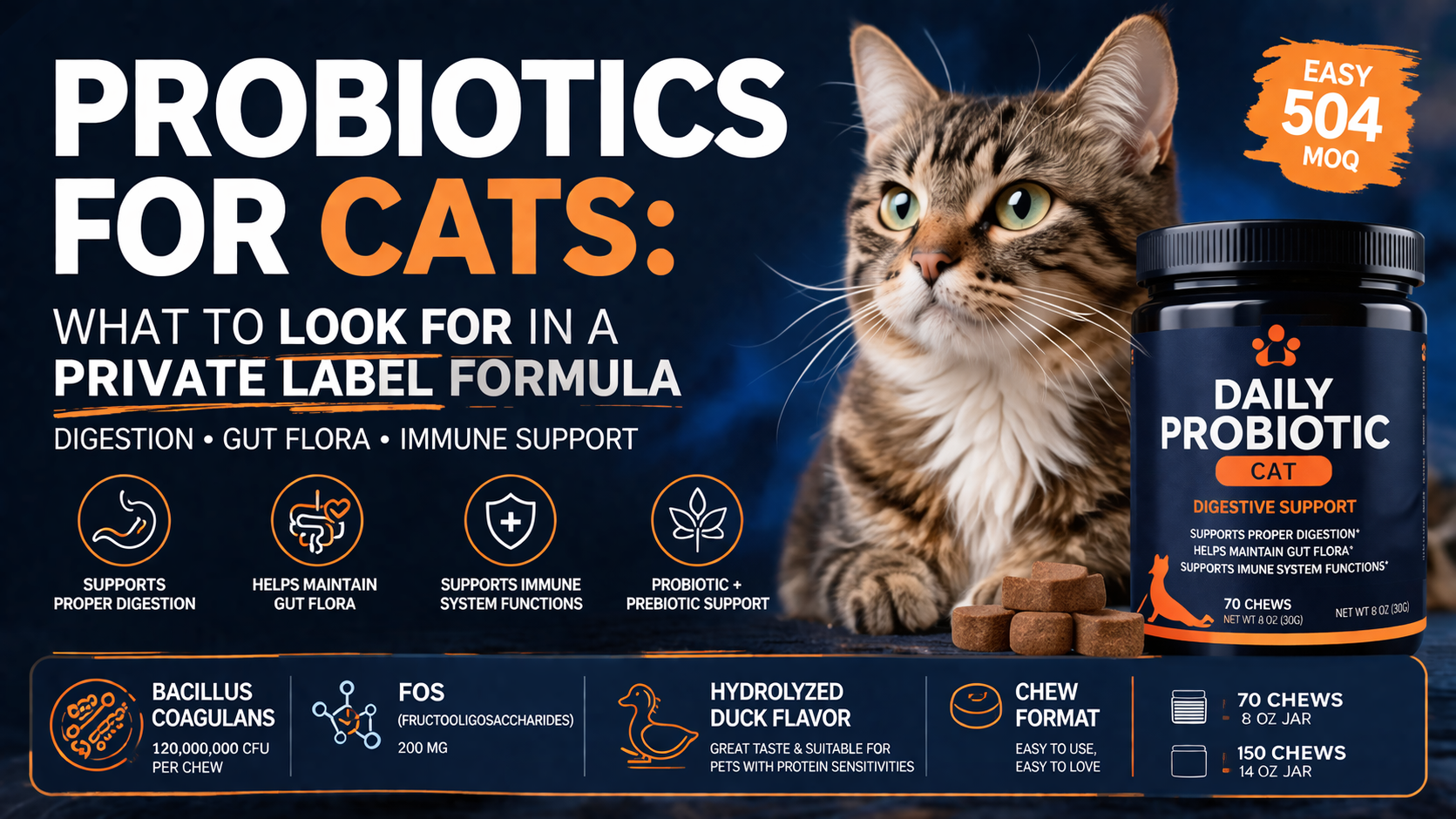
A lot of probiotics for cats sound better on the front of the label than they do under a closer read.
That is the real tension in this category.
One product says digestive support. Another says gut health. Another says immune support. Another says it contains probiotics. Fine. But that still leaves the bigger question hanging in the air: what actually makes a probiotic for cats worth taking seriously?
That question matters for two different readers. It matters for the cat owner trying to understand what supports daily digestive wellness. And it matters for the brand looking at a private label feline product and trying to separate a real formula story from generic supplement copy.
The stronger products usually do not rely on one buzzword. They build a more complete digestive support story. That means looking beyond “contains probiotics” and asking whether the formula also supports gut flora, daily compliance, palatability, and real-world use. In that sense, the best probiotics for cats are not just about adding beneficial bacteria to a label. They are about building a formula that makes sense from ingredient panel to daily routine.
The best probiotics for cats usually do more than add a vague probiotic claim to the label. A stronger formula supports digestion, helps maintain gut flora, and makes daily use easier for both cats and their owners.
At the simplest level, probiotics for cats are used to support digestive balance.
That sounds broad because it is. Digestive wellness is not one tiny issue. It touches stool quality, gut flora balance, daily comfort, and the overall rhythm of how well a cat handles food and routine. It is also why cat digestive support keeps showing up as a durable category. A lot of owners are not looking for something dramatic. They are looking for something steady. Something practical. Something that fits daily use.
That is where a daily cat probiotic starts to make sense. Not as a miracle product. Not as a cure-all. Just as a digestive wellness product built to support proper digestion, help maintain gut flora, and support immune system function as part of a broader gut-health story.
That last point matters more than many brands realize. The gut is not just a digestion conversation. It is also tied to immune support, which is one reason digestive formulas often carry more weight than their category label first suggests.
This is where a lot of content gets fuzzy.
Probiotics are beneficial bacteria.
Prebiotics are the fuel that helps support beneficial bacteria in the gut.
That is the cleanest way to say it.
A product that only says “contains probiotics” may still sound appealing, but a product that combines probiotics and prebiotics tells a more complete story. It is not just dropping bacteria into the mix and hoping that sounds impressive. It is also accounting for the environment those beneficial bacteria live in.
That is why probiotic-plus-prebiotic positioning is stronger. It feels more complete because it is more complete.
In the PTL product you outlined, that combination shows up clearly: Bacillus coagulans as the probiotic ingredient and FOS at 200 mg as the prebiotic support ingredient. That pairing gives the formula a cleaner digestive support narrative than vague label language ever could. It says more than “good for gut health.” It shows how the product is trying to support that goal.

The best probiotic for cats is usually not the one with the loudest label. It is the one with the clearest logic.
Start with ingredient specificity.
If a formula uses a named probiotic such as Bacillus coagulans, that is more meaningful than broad language about beneficial bacteria. Specificity gives the product more credibility. It also gives a brand something concrete to talk about.
Then look at whether the formula includes prebiotic support. Again, this is where FOS matters. A probiotic alone may be enough for a marketing headline. A probiotic plus prebiotic formula is better positioned for an actual digestive-support conversation.
Next comes format. A chew probiotic for cats has an obvious advantage over products that create daily friction. If the cat will not take it, the formula quality stops mattering. Daily use products live or die on compliance.
Then look at flavor. This part gets dismissed too often by people who think ingredients win the whole sale. They do not. Cats are selective. A hydrolyzed duck flavor gives this formula a practical palatability angle, and it also creates a relevant positioning point for brands thinking about cats with protein sensitivities. That is not a disease claim. It is just smart product framing.
Finally, look at whether the formula story feels grounded. Does it support proper digestion? Does it help maintain gut flora? Does it support immune system functions as a secondary benefit? If yes, you have a product with structure. If not, you may just have a supplement label with a digestive headline.
This is where the product moves from generic to credible.
Bacillus coagulans gives the formula a named probiotic ingredient instead of a hand-wave. That matters because cat digestive support is crowded with products that stay vague on purpose. Vague gives marketers room. Specific gives buyers confidence.
Then there is the FOS piece. At 200 mg, it does real work in the formula story because it supports the prebiotic side of the equation. Together, Bacillus coagulans and FOS let the product speak to both sides of digestive balance: the beneficial bacteria and the environment that supports them.
That combination is what helps separate a stronger formula from the endless wave of “best probiotics for cats” copy that says very little once you get past the headline.
There is also a business advantage here. A brand can explain this formula without sounding forced. Named probiotic. Prebiotic support. Digestive wellness. Gut flora maintenance. Immune support as a secondary layer. That is a cleaner message than trying to sell a fuzzy digestive product with no specifics.
This category is not won in theory. It is won in the food bowl.
A chew format makes daily use easier. That is not exciting copy, but it is real. It lowers friction. It helps with consistency. It makes the product more usable in an everyday routine, which is exactly what a feline digestive supplement should do.
Flavor matters just as much.
Hydrolyzed duck flavor gives this product a sharper angle than generic meat-flavored digestive chews. It helps with palatability, and it gives brands a cleaner way to speak to cats that may be sensitive to more common protein sources. That is a useful market distinction without drifting into medical overreach.
This is one of the easiest places to spot weak product strategy. A brand can talk all day about cat gut health, but if the product is annoying to serve or hard for the cat to accept, the repeat-purchase story falls apart fast.
This keyword matters, but it needs a steady hand.
Yes, probiotics for cats with diarrhea are something people commonly look up. That makes sense. When a cat has digestive upset or stool inconsistency, owners naturally start searching for digestive support options.
But the responsible framing is this: probiotics are commonly discussed in the context of gut balance, stool quality, and everyday digestive support. They are not a substitute for veterinary care in cases of persistent, severe, or unexplained diarrhea.
That distinction matters.
The article should meet the search without pretending to diagnose or treat. A product like this fits best in the conversation around supporting digestive wellness and gut flora, not making promises it should not make.
From a business standpoint, this is a smart SKU.
Digestive support is broad enough to attract steady interest, but specific enough to feel useful. It is easier to position than some niche formulas because the benefit is intuitive. People understand digestion. They understand daily support. They understand gut health, even if they do not always understand the difference between probiotics and prebiotics at first.
That makes probiotics for cats a strong private label category. The educational lift is manageable. The repeat-use potential is real. The category fits both ecommerce and retail logic.
For brands building out a broader private label cat supplements line, digestive support is one of the more practical everyday SKUs to bring to market. Pet Tech Labs offers feline products in multiple formats, including chews, granules, powders, and tablets, while positioning its cat supplement program as a turn-key solution for growing brands.
That broader context matters. You need a pet supplement manufacturer focused on quality standards, NASC Preferred Supplier positioning, veterinary-community formulation support, and turn-key manufacturing designed to help brands get products to market without building their own infrastructure.
This is where the conversation gets practical.
A lot of brands do not need another product idea. They need a product they can actually launch without choking on inventory.
That is why MOQ matters.
Pet Tech Labs makes this point clearly in its own positioning. The company says many pet supplement manufacturers require 800-unit minimums, while its model is built around lower thresholds and flexible packaging options, including soft chews starting at 504 units for standard products. That makes the private label process easier to say yes to for brands that want to test a product before overcommitting.
It also strengthens the appeal of working with a partner that already offers broad private label services across the category. Instead of trying to build everything from scratch, a growing brand can launch a feline digestive support product with less operational friction and more room to learn what the market wants. Pet Tech Labs describes its private label offering as a way to supply best-selling pet supplements in branded inventory, supported by research, manufacturing, and third-party ingredient testing.

What do probiotics for cats do?
Probiotics for cats are generally used to support proper digestion, help maintain gut flora, and support daily digestive wellness. Some formulas also position immune support as a secondary benefit.
What is the best probiotic for cats?
The best probiotic for cats usually offers more than a generic label claim. Look for a named probiotic ingredient, prebiotic support, a format that works for daily use, and a flavor cats are more likely to accept.
What should a probiotic for cats include?
A stronger probiotic for cats should include a named probiotic strain, a prebiotic ingredient, a practical delivery format, and a clear digestive support story. In this case, Bacillus coagulans plus FOS makes that logic easy to understand.
What is the difference between probiotics and prebiotics for cats?
Probiotics are beneficial bacteria. Prebiotics help feed and support beneficial bacteria in the gut. A formula that includes both tells a more complete cat gut health story.
Are probiotics for cats with diarrhea a common option people look for?
Yes. Many owners search for probiotics for cats with diarrhea when they are concerned about digestive balance or stool quality. That said, persistent or serious digestive issues should be discussed with a veterinarian.
Why does flavor matter in cat probiotics?
Because compliance matters. If the cat refuses the product, the formula cannot do much. Flavor is not cosmetic in this category. It is central to whether the product gets used consistently.
Why does chew format matter for cat supplements?
Chews are easier to use daily than products that add friction. A chew probiotic for cats fits more naturally into routine use, which supports compliance and repeat purchase.
Why does MOQ matter for a private label cat probiotic?
MOQ affects how much risk a brand takes on at launch. A lower MOQ gives growing brands more room to test, learn, and scale without tying up excessive capital in inventory.
Looking to Launch a Private Label Probiotic for Cats?
Pet Tech Labs helps brands bring practical feline digestive support products to market with less friction, including flexible packaging options and low-MOQ paths that make early-stage launch decisions easier.
A lot of glucosamine chews for dogs look the same at first glance. Big front-label promises....
Pet Tech Labs Team
International Cat Day lands on August 8, and while most brands use it as an excuse to post a photo,...
Pet Tech Labs Team
The pet supplement market has crossed into the mainstream. According to the American Pet Products...
Pet Tech Labs Team
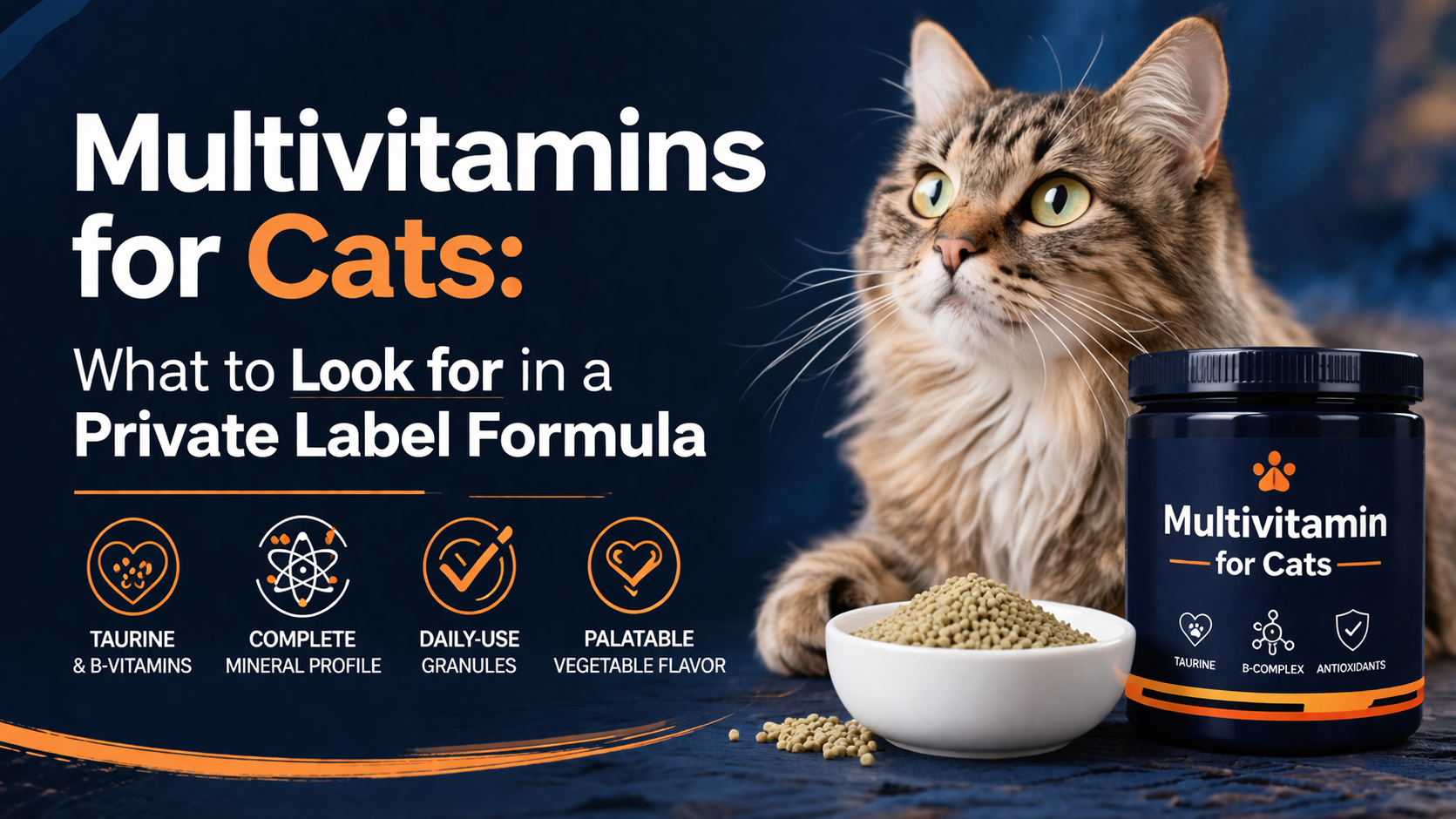
Quick Answer: What Should a Good Multivitamin for Cats Include? A strong multivitamin for cats...
Pet Tech Labs Team

Pet Tech Labs® sets the gold standard for companies looking for top-quality pet supplements and private labeling or contract manufacturing solutions
Pet Tech Labs® is part of the FoodScience® family of brands. Learn more at foodsciencecorp.com